

Heritage (Grains) and Griddle Cakes
“A pancake is just an avenue to add things on top.”
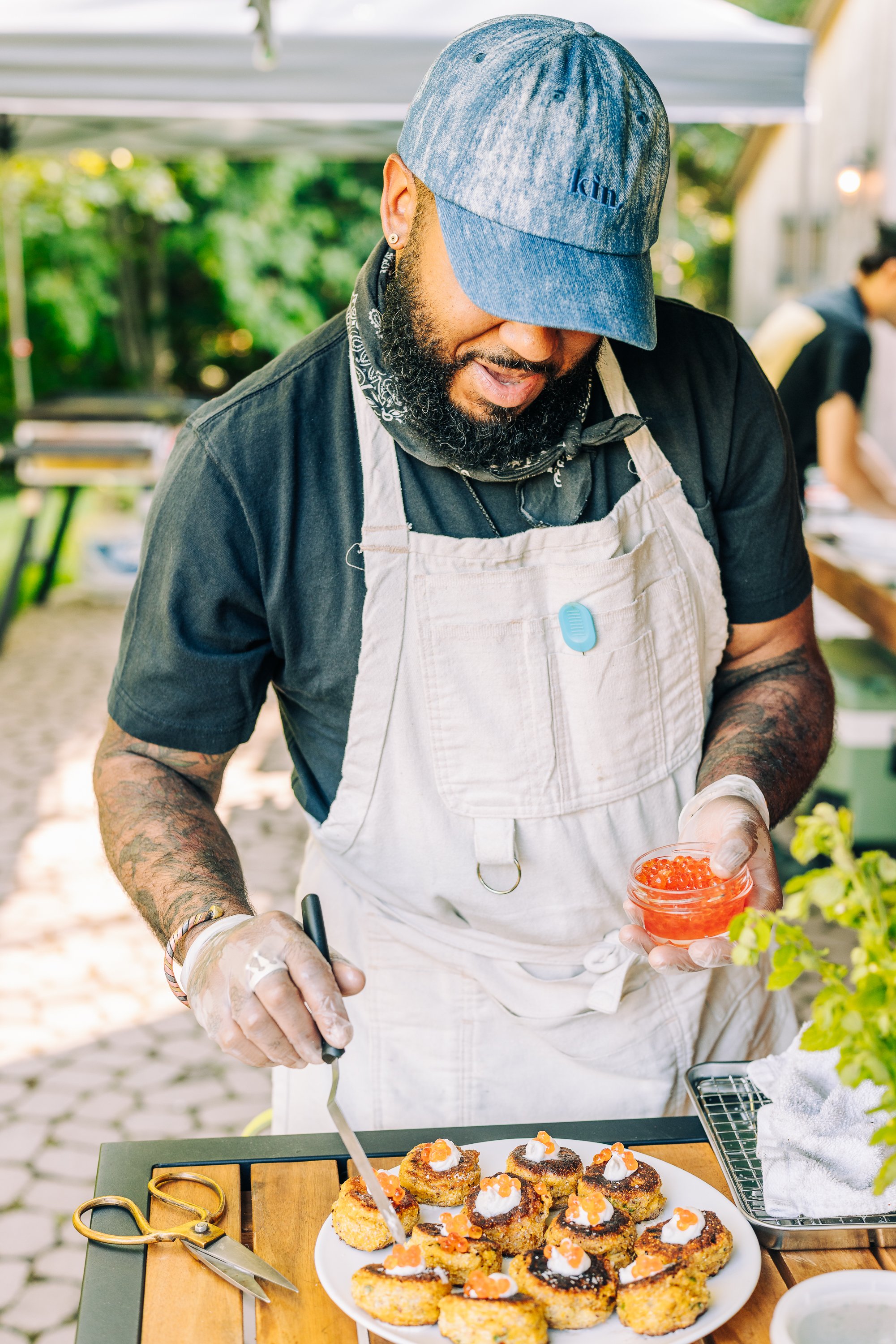
“My first experiences sitting at a long table were because my great-grandmother prepared all of the dishes whenever we gathered,” says Chef Brent Foster. On holidays and special occasions, his great-grandmother Geneva would cook for whomever might show up to her house. “It became beyond a family dinner,” says Brent. “She was building this experience for everybody.” Brent remembers, almost more than these dinners themselves, the potato pancakes Geneva would make the next morning for breakfast.
“I wasn’t familiar with the idea of a pancake being made of anything other than pancake mix.” Many years later, Brent references that revelation when discussing one of his now-signature dishes, Johnny cakes.
These cornmeal pancakes appear by many different names (hoe cakes, Shawnee cakes) throughout the American diaspora, often as a simple blend of corn, water, and salt, cooked in fat on a hot pan. They are historically tied to New England, where indigenous Americans introduced them to early British settlers (wheat was difficult to preserve on the long voyage across the Atlantic), but they also show up in recipes throughout the east coast of the North America and across Black cultures in the Caribbean. Regardless of region, “they all knew how corn worked,” Brent explains.
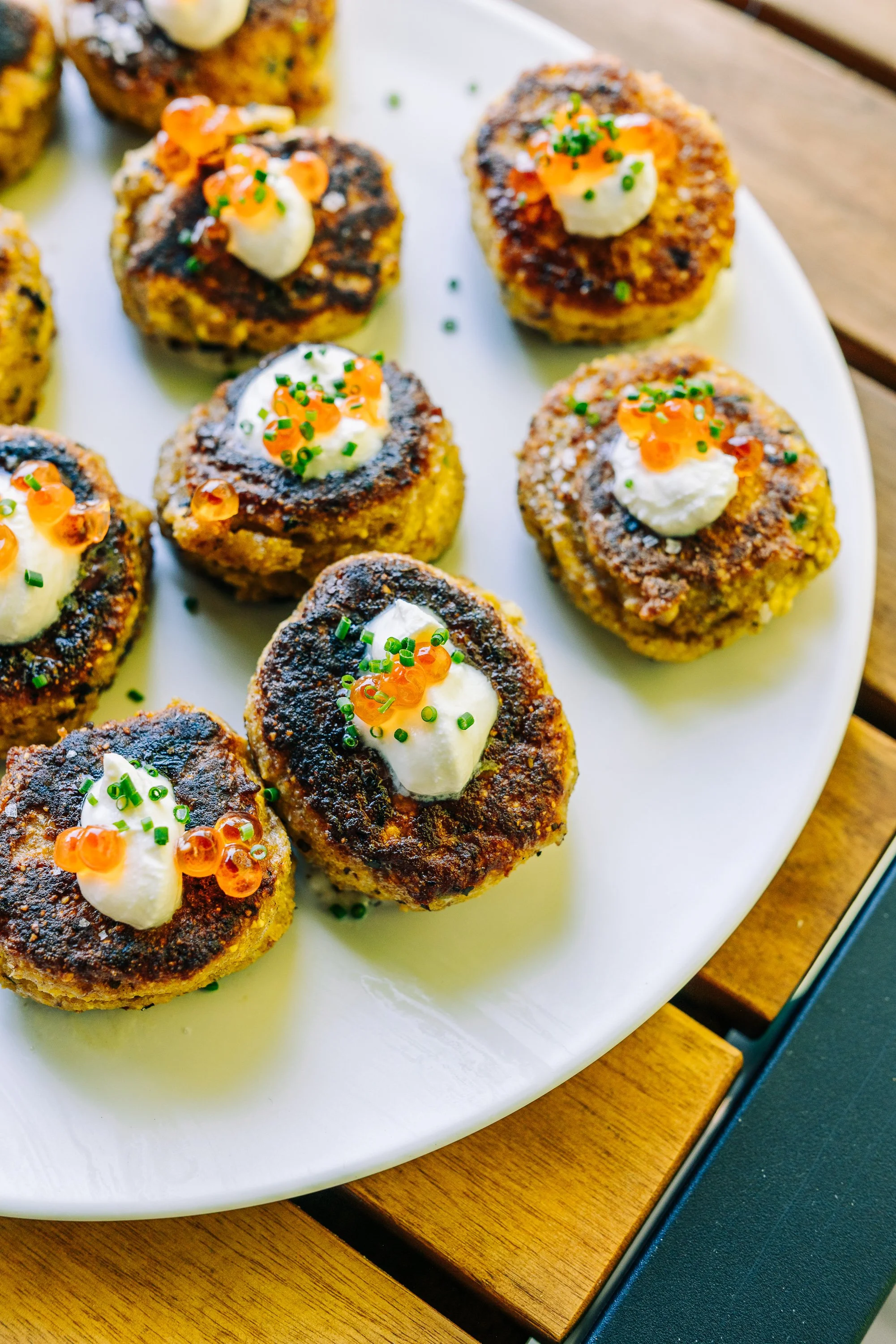
For our late-summer Supper in New Hampshire, Brent topped his Johnny cakes with homemade crème fraîche, trout roe, and farm-fresh scallions, but you can use them as a base for any seasonal toppings you’re craving. These cakes have been popular for hundreds of years in part due to their versatility — “a pancake is just an avenue for sauces, or to add things on top,” Brent explains. The toasty flavor of cornmeal caramelizes on the outside of these griddle cakes to create a delicious, subtly sweet pancake perfect for topping with any variety of sauces or garnish. They pair great with smoky, creamy or crunchy, salty toppings, or a combination of both! Most importantly, feel free to be generous when buttering the pan. “Corn plays nice with butter,” Brent advises; it adds warmth and flavor to build a beautiful canvas. “With the proper application of butter,” says Brent, “it has a real down-home feel, no matter what.”
Set the Table
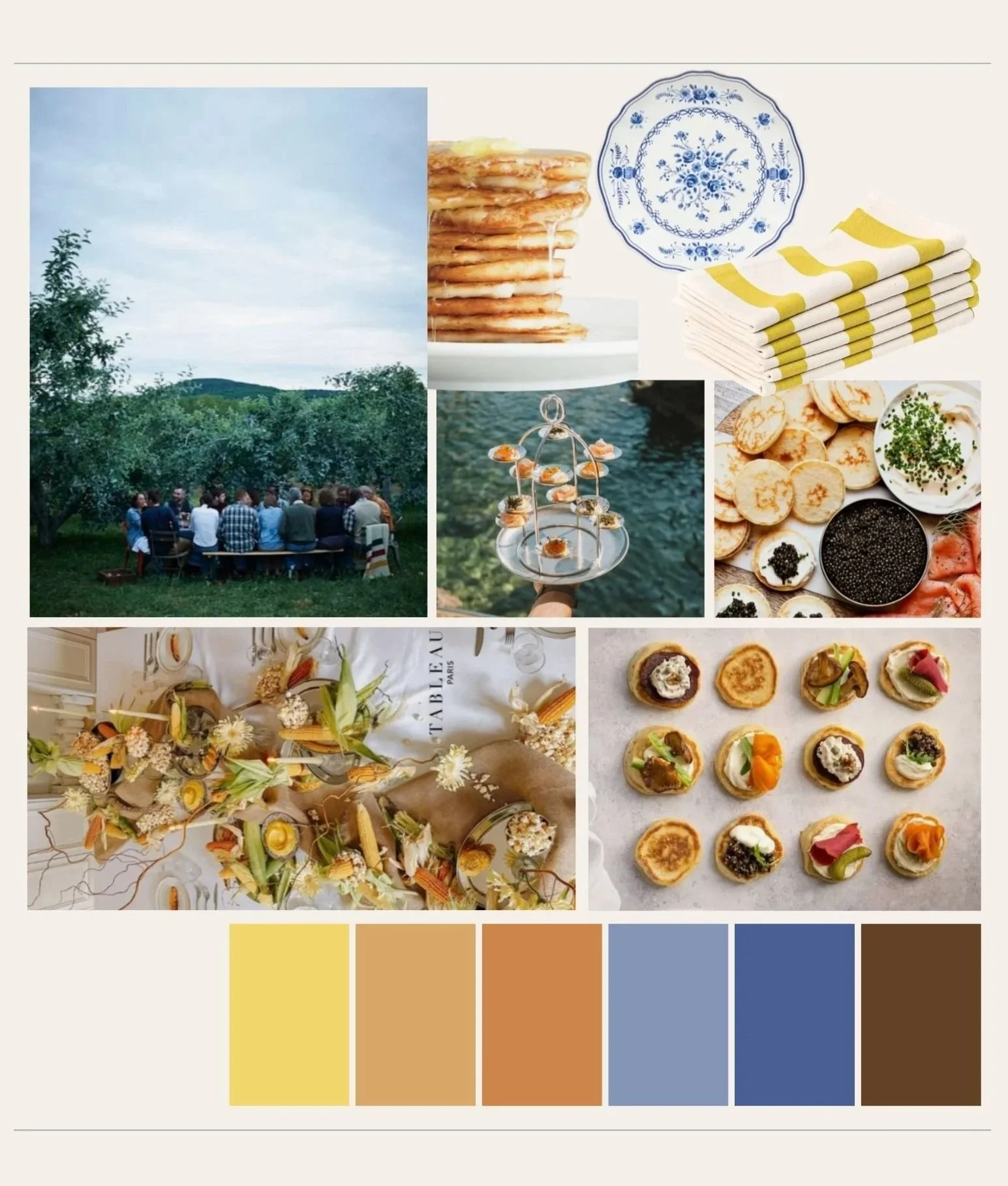
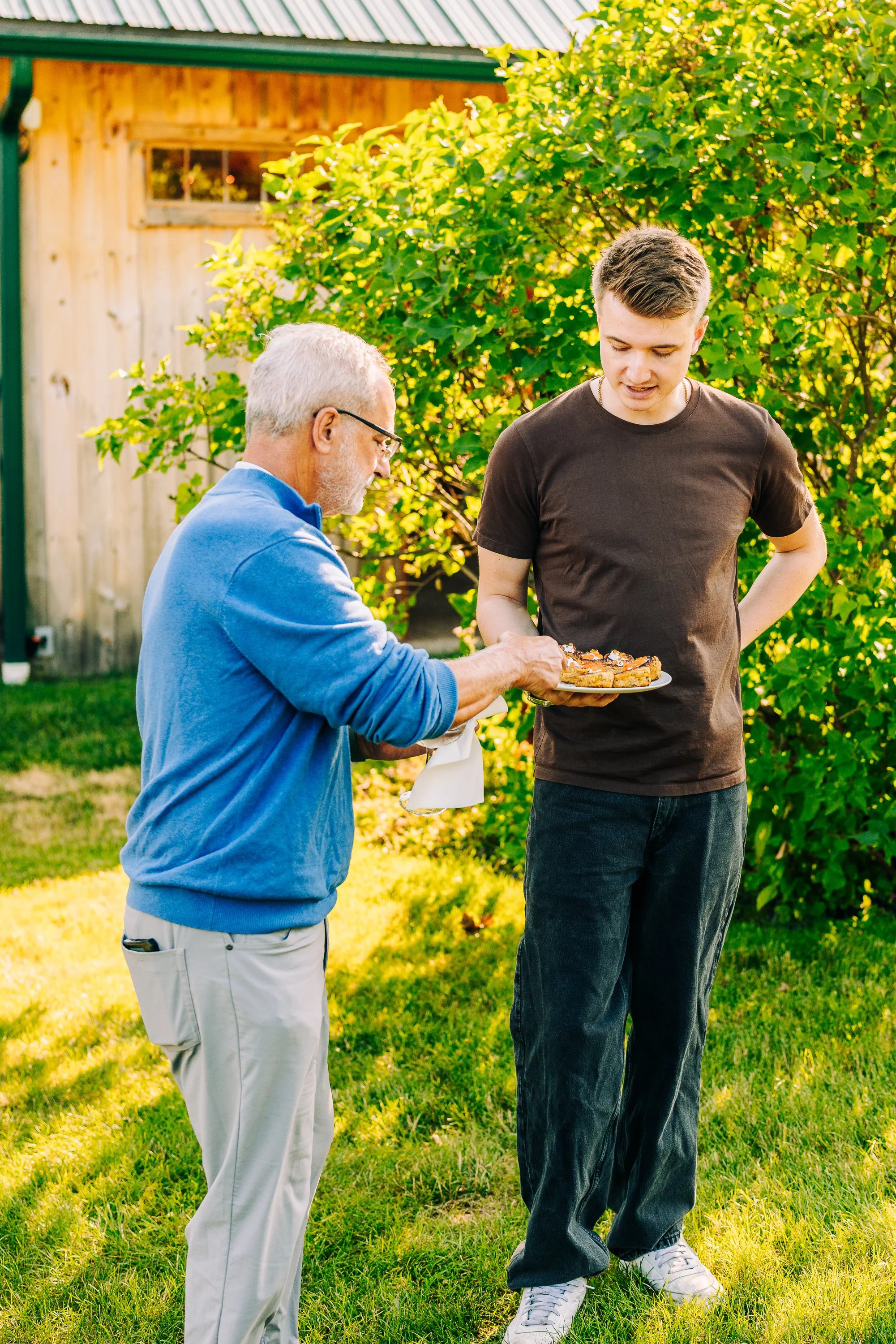
Johnny Cakes are wonderful for a casual, rolling gathering. If you’re building cakes with your own curated toppings, add a touch of luxury with a bronze platter and assign a friend to pass them out while you man the stove. For something a bit more communal, create a toppings bar: style a table with some late-season flowers and several topping options using these pinch bowls and appetizer plates, then let your guests to build their own perfect bite. These napkins add an earthy warmth to match the corn flavor of the pancakes.
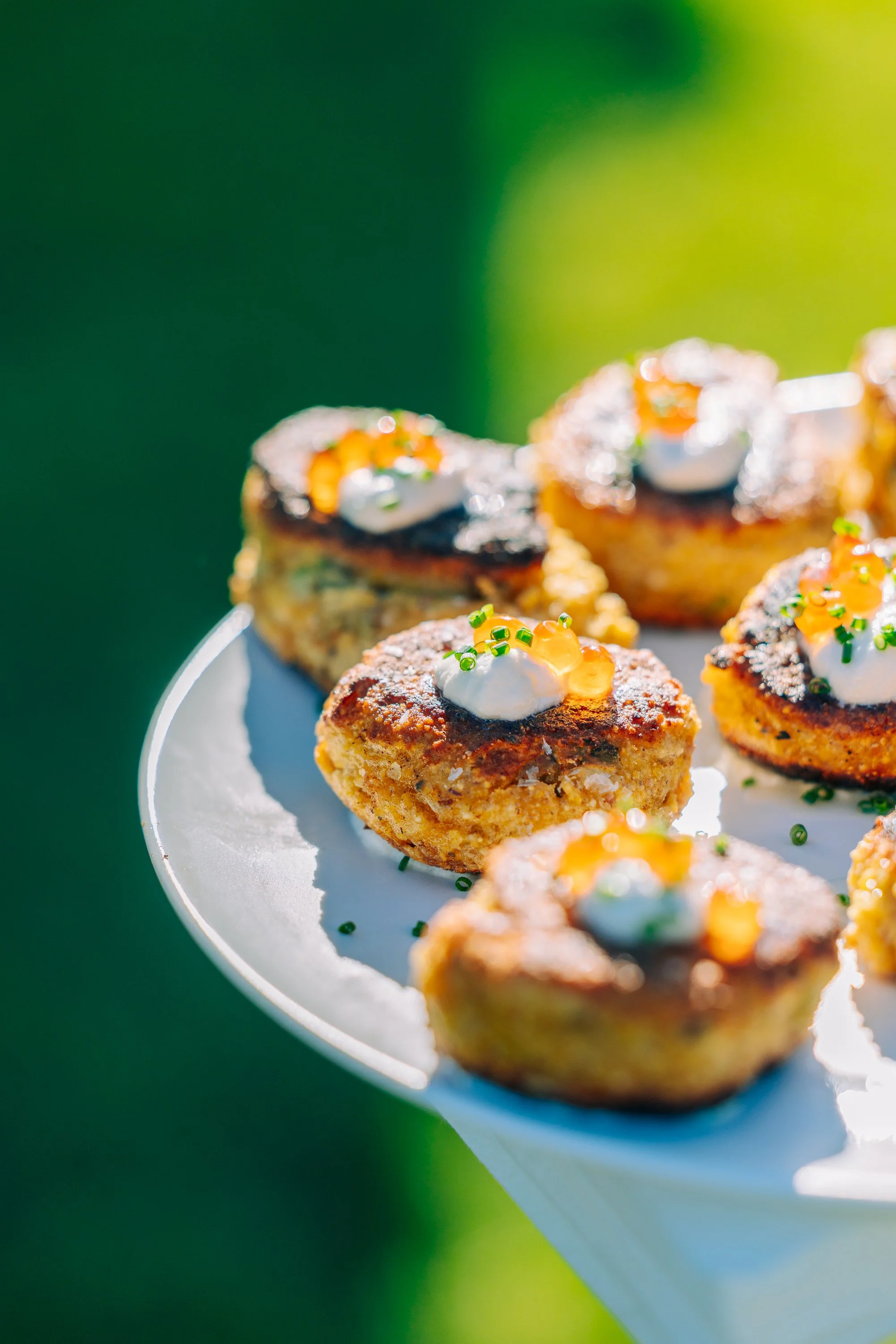
Johnny Cakes
by Brent Foster
As Brent was building the menu for our Supper to benefit The New England BIPOC Festival with the farmers of Cultivate, the first dish he decided on was Johnny cakes made with Wapsie Valley heritage cornmeal. Years ago, Sarah Cox from Tuckaway Farm and her then-neighbor Tyler Murray of Granite Grains started growing Wapsie Valley corn for one of Cultivate’s founders, Chef David Vargas, who was looking for a way to produce New-England grown corn tortillas for his restaurant.
This region’s famously short growing season, with long, wet springs and early, unpredictable frosts, makes it particularly difficult to grow corn, which needs time to dry on the stock before harvesting. Wapsie Valley corn matures faster and offers a higher yield than other heritage varieties. Most importantly, the final product has a “toasty, fritos-type flavor, very corny,” explains Tyler, and beautiful colored kernels.
“The pancake is the vessel, but also the highlight,” explains Chef Brent. Cornmeal adds a wonderful sweetness that pairs well with many different combinations, both sweet and savory.
Makes about 50 silver-dollar cakes
Ingredients
1 bunch scallions (optional)
4 cups AP flour
4 cups cornmeal
44g baking powder
1 ¼ Tbs kosher salt
8 eggs
4 cups buttermilk
2 cups water
butter for cooking*
Method
Char scallions on a grill or in a hot cast iron pan. cool and finely chop. (if you’re making sweet Johnny cakes, skip this step.)
Combine all dry ingredients in a large bowl.
Whisk together eggs and buttermilk. Slowly pour liquid into dry ingredients and whisk until well combined. Add water until batter is a thick but pourable consistency. Fold in scallions.
Heat a medium cast-iron skillet over medium heat. Melt a generous pat of butter into the pan with about a tablespoon of oil. Using a ¼ cup measure or an ice cream scoop, plop Johnny cakes into cast iron pan.
Allow a few minutes for a crust to form on one side of the cakes, then carefully flip. When both sides are crispy and cakes are cooked through, remove to a cooling rack and immediately sprinkle with flake salt.
Add your desired garnish and enjoy!
Garnish
Build your garnish with four flavors in mind: something smoky, something creamy, and something salty to play off the inherent sweetness of the pancakes.
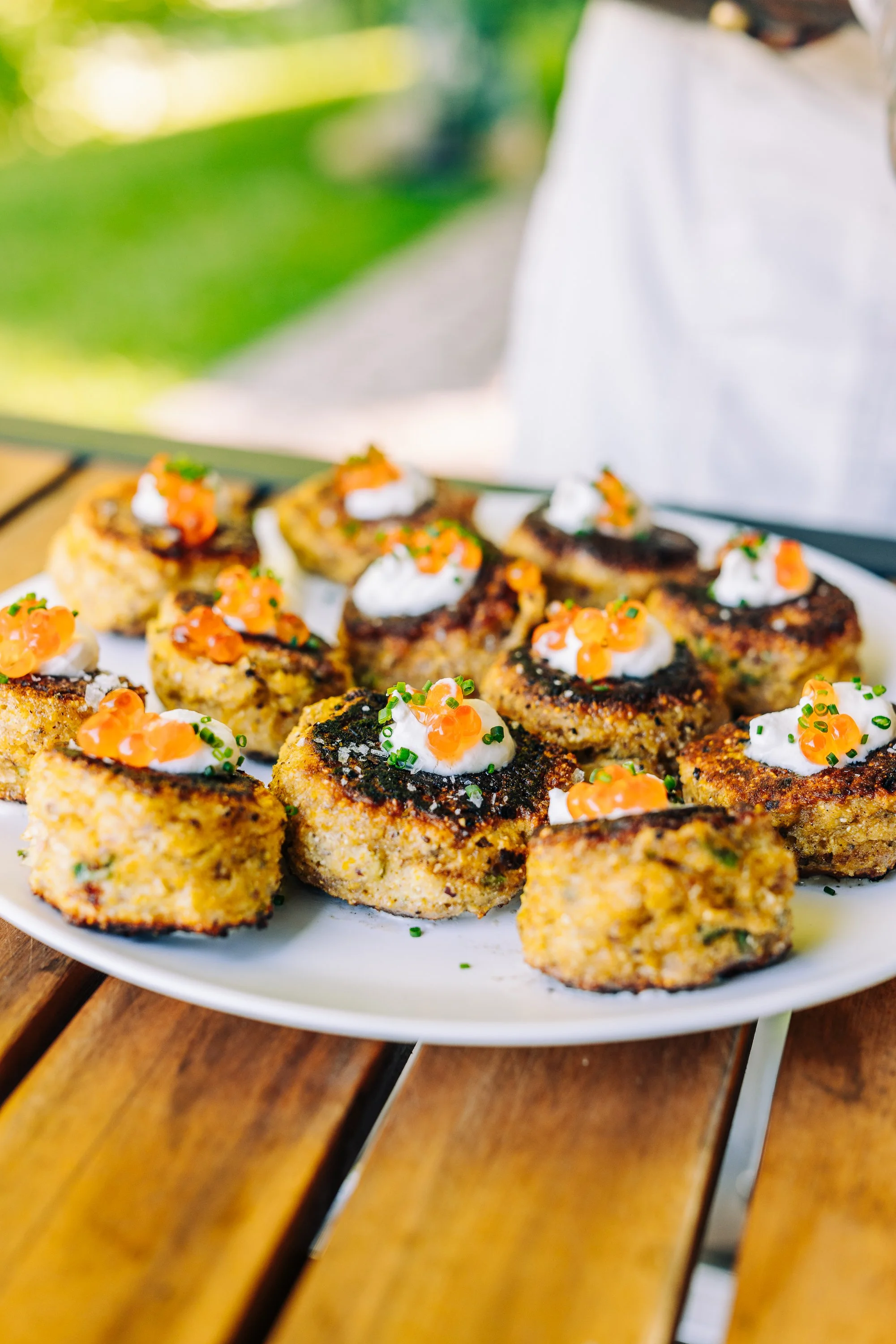
Summer: charred jalapeno, cheddar, and sour cream
Fall: crème fraîche and caviar
Winter: prosciutto with adobo honey
Spring: bacon, scallion, and garlic aioli
Sweet: butter and jam, yogurt and fresh fruit, berries and chantilly cream
Leftover Johnny cake batter can be stored in an airtight container for up to two days. You may need to add a splash of water or buttermilk and stir before using.
Pairings
We love to pair these sweet-savory corn cakes with a textural white wine that can play with the layered flavors, like an off-dry Vouvray or a Southern Rhône Marsanne-Roussanne blend. Of course — especially if you’re choosing crème fraîche and caviar — something sparkling would always be wonderful.
If you’re looking for zero-proof options, Saint Viviana Sauvignon Blanc’s bright citrus and green herbal notes would play great with summer vegetables, while its acidity cuts through a creamy topping perfectly. The Substitute Riesling’s fruit and acid create an ideal sweet-savory counterpoint for these cakes. If you’re choosing sweet toppings, The Substitute Merlot Rosé would balance perfectly with strawberries, raspberries, or a red-fruit preserve. If you’re going for bubbles, we love the creamy, brioche-like character of Oddbird Blanc de Blancs.
this post contains affiliate links